Dyson CameraJet: A £420 Toothbrush With Computer Vision
TL;DR
Dyson's first toothbrush, the £419.99 CameraJet (launched 1 September 2026), uses a 100,000-pixel camera and an ML model trained on 470,000 dental images to detect interdental gaps and fire mouthwash jets at them within 100ms — the first mainstream appliance to close the sense-decide-actuate loop in your mouth.
Dyson’s first toothbrush is less a grooming gadget than an embedded computer-vision system that happens to clean teeth. The Dyson CameraJet, launched on 1 September 2026 at £419.99 ($499 in the US), puts a 100,000-pixel macro camera inside the brush head, runs its frames through a machine-learning model trained on 470,000 dental images, and fires a precision jet of mouthwash at every gap it finds — all within about 100 milliseconds of detection. Cameras in toothbrushes have been tried before, and so have brush-flosser combos. What nobody had shipped until now is the closed loop between them.
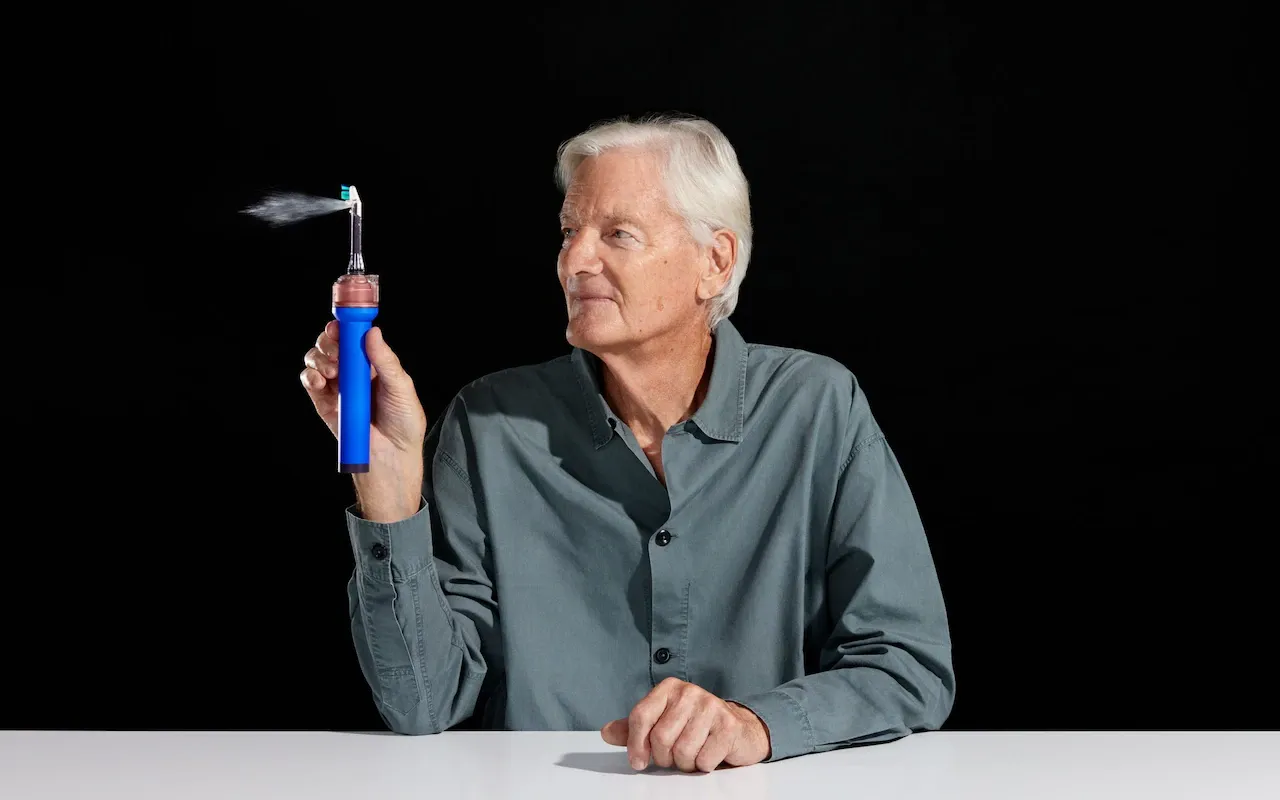
Sir James Dyson says the CameraJet “introduces an entirely new way to keep your mouth healthy”. Image: David Vintiner/Dyson
What is the Dyson CameraJet?
The CameraJet is an electric toothbrush that brushes, flosses and applies mouthwash in a single three-minute session. A camera embedded in the head watches your teeth as you brush; when it identifies an interdental gap — the sort of space you would normally floss — a nozzle below the bristles fires a burst of Dyson’s own “mouthrinse” into it to flush out plaque. The Telegraph’s launch coverage, based on an early hands-on briefing, describes a 12.5ml tank between head and handle that holds exactly one session’s worth of rinse.
It took six years, 661 engineers and 38 patents to get there, including a roughly five-year collaboration with the National University of Singapore’s dentistry faculty, which helped Dyson develop a synthetic “proxy plaque” material to test cleaning efficacy in the lab. The brush launches in two colourways — Ceramic Ultra Blue and Ceramic Pink — through Dyson Demo Stores and dyson.co.uk. The UK set bundles the dock, travel case, two brush heads and starter supplies of the toothpaste and mouthrinse; US buyers get the hardware but buy the consumables separately.
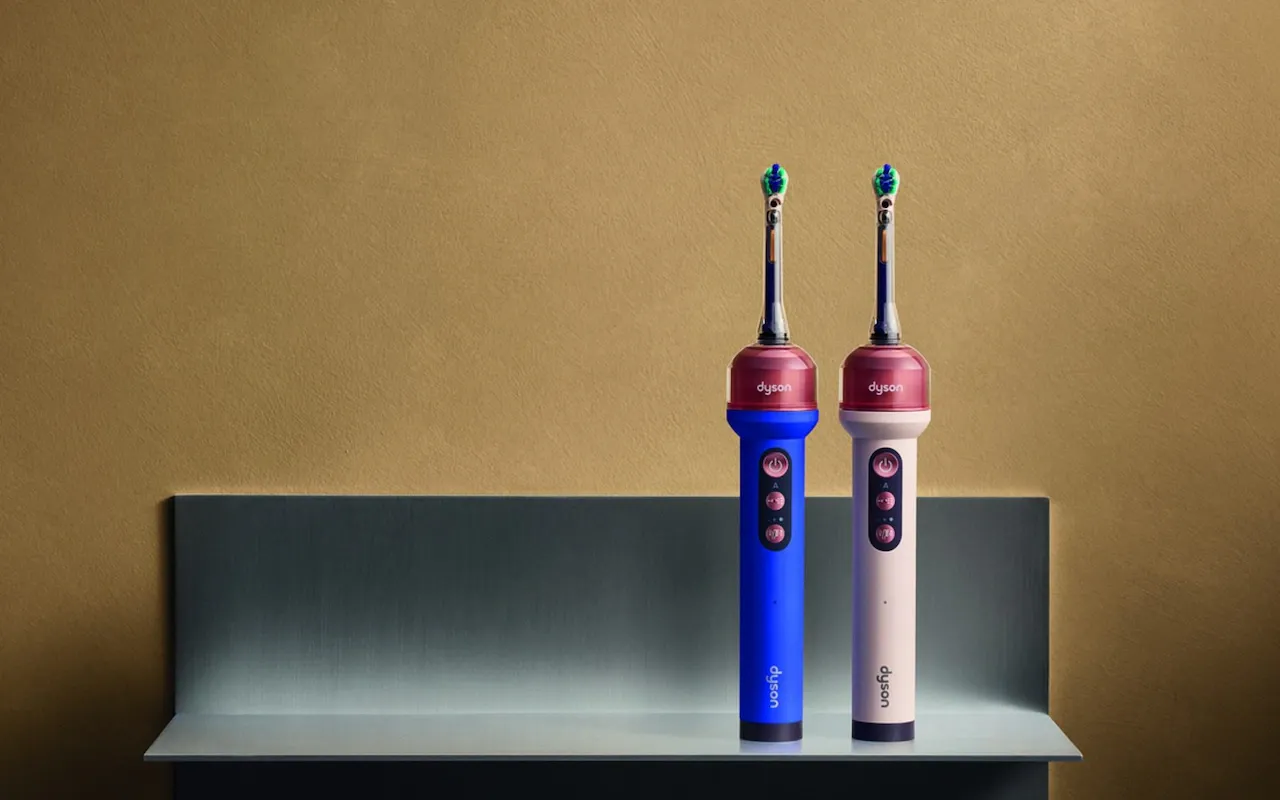
The two launch colourways: Ceramic Ultra Blue and Ceramic Pink. Image: Dyson
How the camera-guided jet actually works
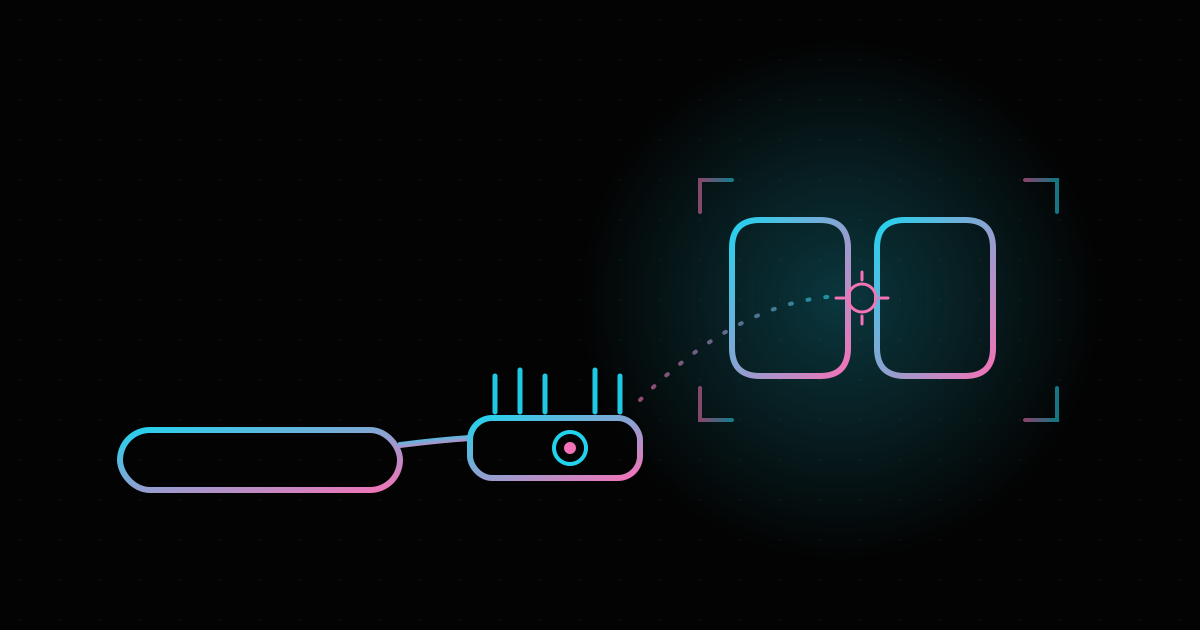
The interesting engineering is in how modest the components are individually, and how tight the loop between them is. The camera is only 100,000 pixels — 0.1 megapixels, laughable by phone standards but exactly right for embedded inference, where resolution you don’t need is latency you pay for. Dyson’s Gap Optical Targeting system analyses 28 images per second, firing the jet as soon as a gap crosses the lens. The product as a whole reportedly runs on 16 million lines of code — a reminder that the physical brush is the smallest part of the system.
The fluid side is equally considered. The 12.5ml tank is an “anti-gravity” design — a diaphragm pump and pressure chamber that keep the jet working whether the brush is upright, angled or horizontal. Each burst is a broad, cone-shaped spray run deliberately at lower pressure than a typical water flosser, to be gentler on gums and enamel. The dock refills the tank in about three seconds; the brush also charges over USB-C, so the bulky dock can stay at home when you travel.
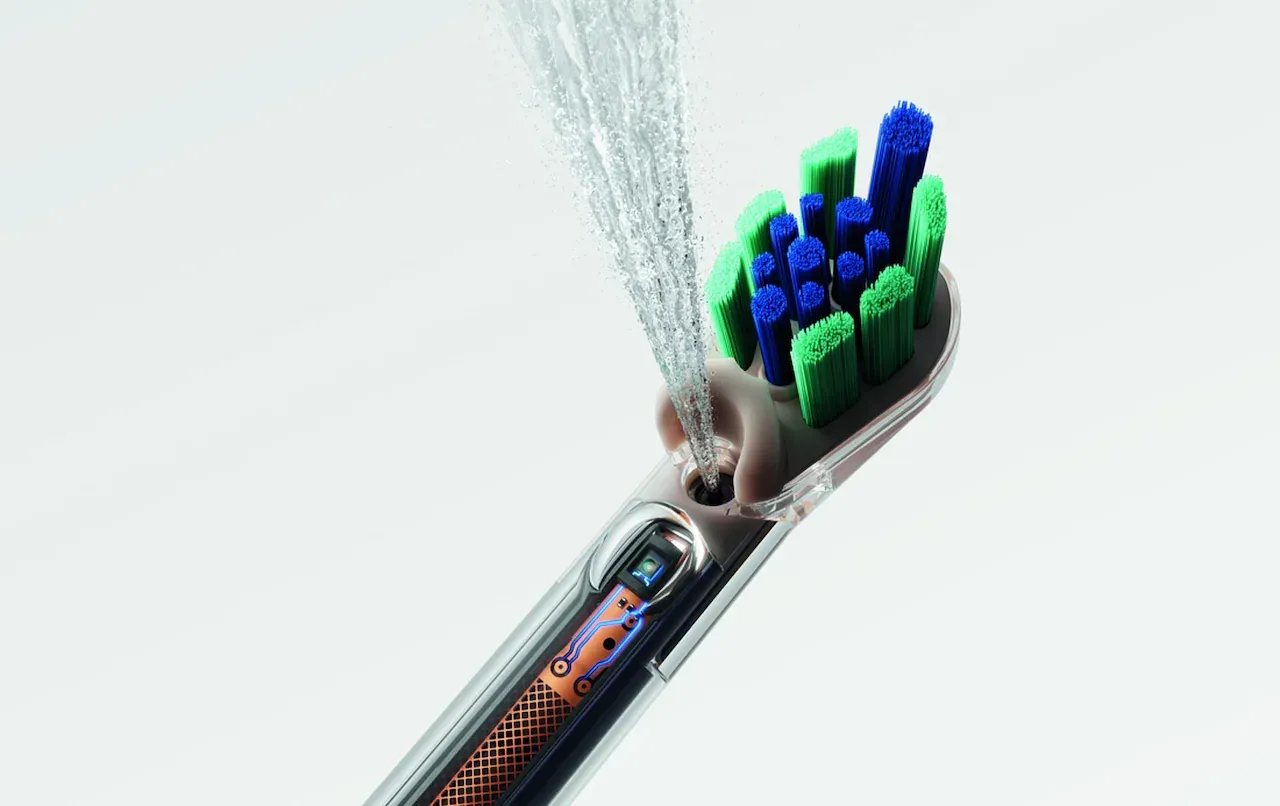
The nozzle sits below the bristles, next to the camera that aims it. Image: Dyson
Two software details stand out. First, the vision system dictates your toothpaste: the CameraJet needs SLS-free paste, because the foam produced by standard sodium-lauryl-sulfate formulas would occlude the camera — a classic case of the sensor’s requirements propagating all the way out to the consumables. Dyson conveniently sells its own SLS-free toothpaste and mouthrinse alongside the brush. Second, privacy: Dyson says camera footage is never recorded or stored, on-device or in the cloud — frames are processed live and discarded, though you can watch the feed in the MyDyson app while you brush.
What dentists make of it
The Telegraph put the launch to general and cosmetic dentist Dr Tilly Houston, whose verdict is a useful counterweight to the spec sheet. The live camera feedback impressed her most — “a brilliant piece of behavioural design”, in her words, for the millions of people who currently do nothing between their teeth. Surveys back up how large that group is: only around a third of British adults clean interdentally on a typical day, and Dyson’s own launch material claims nine in ten people don’t floss regularly.
Her reservations are worth taking seriously, though:
- Mouthwash while brushing is normally a “big no no.” Standard NHS-endorsed guidance is spit, don’t rinse — rinsing straight after brushing washes away the fluoride your toothpaste just deposited. Dyson’s simultaneous rinse jet sits awkwardly against that advice, and the company’s counter-evidence so far is a small internal study of 71 participants.
- The SLS-free requirement is a real switching cost. Most mainstream toothpastes foam by design; asking people to abandon a paste they’ve used for decades is a bigger behavioural hurdle than it sounds, even if SLS-free formulas have legitimate benefits for ulcer-prone mouths.
- It won’t replace interdental brushes for everyone, particularly people managing gum disease.
- And her bottom line: “we need large scale, independent scientific research to truly assess the impact.”
How it compares to a decade of attempts
The CameraJet’s individual ingredients all have prior art — which makes what Dyson actually did here easier to see, not harder.
| Product | Year | Launch price | Approach |
|---|---|---|---|
| Onvi Prophix | 2016 | $400 | 10MP camera streams live video — you do the aiming |
| Waterpik Sonic-Fusion | 2018 | ~$180 | Sonic brush + water flosser in one handle, no sensing |
| Colgate Plaqless Pro | 2020 | ~$200 (est.) | Optical plaque sensor lights an LED ring; unclear if it ever properly shipped |
| Soocas Neos | 2023 | $230 ($134 early bird) | Brush + built-in water flosser, crowdfunded |
| Proclaim Custom-Jet | 2024 | ~$600 | 60 water jets in a dentist-scanned, 3D-printed mouthpiece |
| Feno Smartbrush | 2025 | ~$300 | Full-mouth U-brush, 20-second clean, savaged by reviewers |
| Dyson CameraJet | 2026 | £419.99 / $499 | Camera → ML model → auto-targeted jet, closed loop |
Read down that table and a pattern emerges. The Prophix could see but left the decisions to you. The Sonic-Fusion could jet but aimed blindly wherever you pointed it, and the Neos inherited the same blindness five years later. The Plaqless Pro could sense but only lit a ring. Proclaim aims its sixty jets precisely — from a static 3D scan taken months earlier in a dentist’s chair. And the Feno neither sensed nor aimed, which its reviewers duly noticed. The CameraJet is the first to wire perception to actuation in real time: sense, decide, fire, 28 times a second. That’s the same architectural step that separates a backup camera from a car that parks itself — and it’s why “first major household brand to do this”, as the Telegraph puts it, undersells the engineering a little.
Against the incumbents, the pricing depends on which price you believe. On paper the CameraJet undercuts both flagships: Oral-B’s iO Series 10 carries an £800 RRP in the UK ($399.99 in the US) and Philips’ Sonicare 9900 Prestige lists around £550. On the street it’s the other way round — both routinely sell for £250–400, comfortably below the CameraJet’s fixed launch price, and perfectly serviceable electric brushes exist for under £50. What every tier above that baseline is really selling is sensing and software; Dyson has pushed that logic further than anyone, and priced it accordingly.
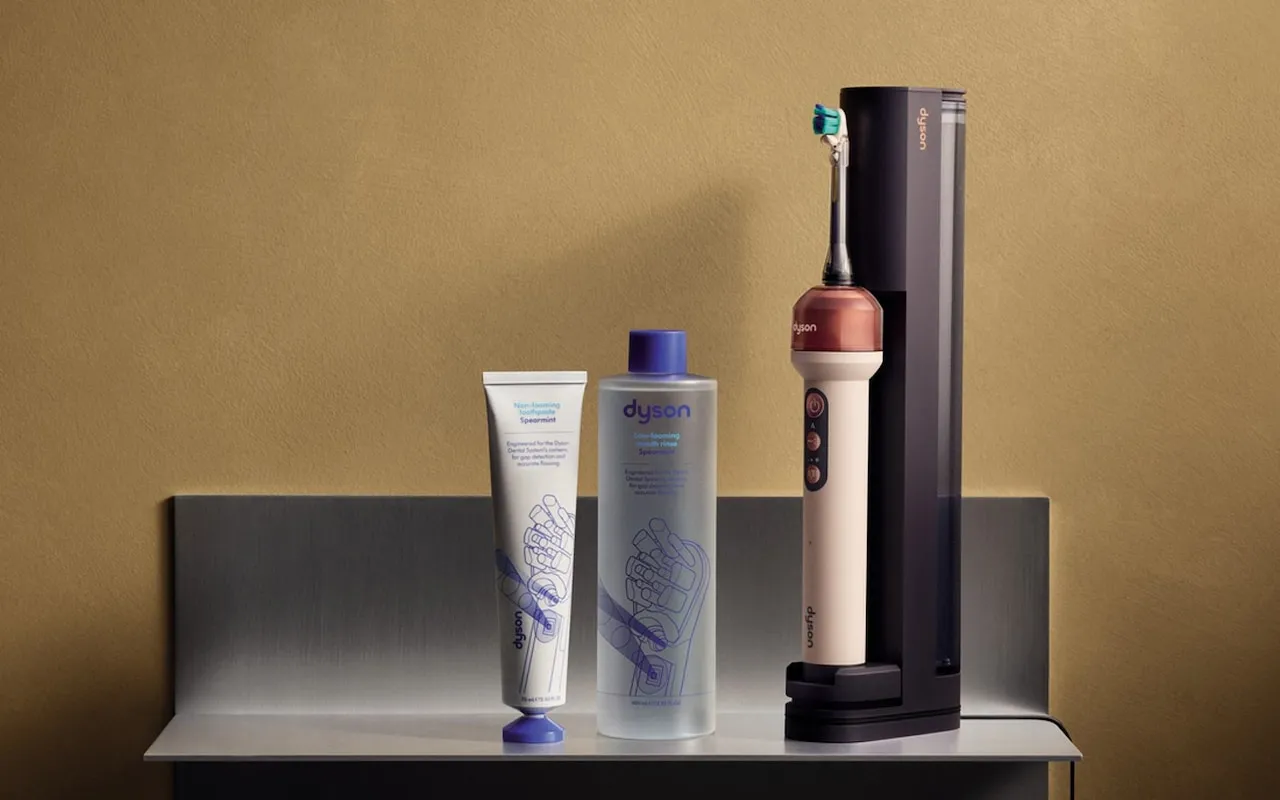
Dyson’s toothpaste, mouthrinse and the refilling dock — sold separately once the starter supplies run out. Image: Dyson
The running costs are the real spec sheet
The £419.99 is only the entry fee. Replacement heads run roughly £25–30 for a pair, RFID-tagged so the brush tracks their wear. The mouthrinse costs about £8.49 for 400ml — and at 12.5ml per session, twice a day, that bottle lasts just over two weeks, or about £16 a month before you’ve bought the ~£10 SLS-free toothpaste the camera effectively mandates. That’s a proper consumables ecosystem, in the finest tradition of razors and inkjet printers, and it’s locked in by a technical dependency (foam blocks the lens) rather than a mere warranty clause.
Should you care?
As a first-generation product, the honest answer is probably: watch, don’t buy. The Telegraph’s own verdict is that it “needs shrinking, for starters”, the simultaneous-mouthwash question genuinely contradicts current dental guidance, and Dyson’s efficacy claims — up to 69% more plaque removal in hard-to-reach areas than premium rivals — are lab results awaiting independent replication.
But as a signpost, it’s hard to ignore. A mainstream appliance brand just shipped a real-time computer-vision pipeline — camera, ML inference, actuation, app streaming, privacy-by-design — into a wet, foamy, GPU-free environment at a consumer price point, and made the machine-learning model the product’s entire reason to exist. Ten years ago that stack lived in research labs. Now it’s in a toothbrush, and the most telling detail is the most mundane one: the model’s training set, not the motor, is the moat.
Sources
- Dyson CameraJet official press release (PR Newswire)
- The Telegraph: Dyson launches a new £420 toothbrush — I asked a dentist their opinion
- Engadget: Dyson CameraJet is a $500 three-in-one toothbrush that scans your maw
- Tech Advisor: Dyson’s CameraJet electric toothbrush is clever, pricey and scary
- Bloomberg: Dyson announces $499 CameraJet smart toothbrush
- TechRadar: Dyson CameraJet review — a week of hands-on testing
- Wallpaper: Dyson CameraJet design story
- WWD: Dyson’s camera- and AI-equipped toothbrush
- UK Government: Delivering Better Oral Health toolkit, Chapter 8 (oral hygiene)
- Journal of Oral Pathology & Medicine: SLS-free dentifrice and recurrent aphthous ulcers (systematic review)
- Tech Advisor: Every Oral-B iO model compared and best cheap electric toothbrushes
- Prior art: Onvi Prophix (PetaPixel, 2016), Waterpik Sonic-Fusion (DentistryIQ, 2018), Colgate Plaqless Pro (Engadget, CES 2020), Soocas Neos (The Gadgeteer, 2023), Proclaim Custom-Jet (CNN Underscored), Feno Smartbrush (Gizmodo)